
The Netherlands is one of the most popular study destinations in continental Europe, and the main reason is language. Dutch universities offer more English taught programmes than any other non English speaking country, especially at masters level, and the fees for non European students are lower than in the United States or the United Kingdom. The country is small, well connected and famously international, which makes it an easy first step into Europe.
This guide explains how the Dutch system works, how to apply through Studielink, when the intakes fall, what documents you need, what the degree will cost, how the residence permit works and what work is allowed during and after your studies. Ranges given here reflect November 2026 and change often, so check official university and embassy pages before you apply.
How the Dutch University System Works
Dutch higher education is split between research universities, known as WO institutions, and universities of applied sciences, known as HBO institutions. Research universities focus on theory, research and academic degrees, while universities of applied sciences focus on practical skills, internships and preparation for a profession. Bachelor degrees usually take three years at a research university and four years at a university of applied sciences, and masters degrees take one to two years.
Teaching in the Netherlands is interactive and student centred, with small group work, presentations, projects and a strong expectation that students speak up in class and manage their own study time. Assessment uses exams, group assignments and a final thesis or project, and the academic year is divided into two semesters or four blocks depending on the university. The Dutch system suits students who like discussion, teamwork and independent study, and it can surprise students who are used to lecture only teaching.
Intakes and the Studielink Application Route
The main intake in the Netherlands is September, when almost every programme starts, and a smaller February intake exists for many masters programmes. Applications begin in Studielink, the national application system, where you register your personal details and your programme choices, and then continue on the university portal, where you upload documents and complete any selection steps. Deadlines for September entry commonly fall in January, February or April depending on the programme, so check each university page carefully.
Some programmes use numerus fixus, which means places are limited and selection is competitive, with a national deadline in mid January. Others use a decentralised selection process run by the university itself. Our guide to study abroad intakes explains the calendar, and the study abroad timeline and application calendar helps you map each step. Start at least 12 months ahead, because selection, housing and the residence permit all need time.
Tests and Documents for Dutch Applications
Most Dutch universities ask for an English language test such as IELTS or TOEFL for English taught programmes, with typical requirements around an overall IELTS score of 6.0 to 6.5, and higher scores for competitive programmes. Some universities accept other tests or waive the requirement for students who studied in English, but check the rule for your course rather than assuming a waiver applies. Our guide on IELTS, TOEFL, GRE and SAT explains which test fits your situation, and the IELTS preparation guide helps you reach your target score.
The core documents are academic transcripts, a motivation letter, a CV and letters of recommendation, with a portfolio for design and art programmes. The motivation letter matters a great deal in the Netherlands, because selection committees read it closely and compare it with your grades. Read how to write a statement of purpose that works, the guide on how to write a strong CV for university applications, and the university application documents checklist before you submit.
Tuition and Living Costs in the Netherlands
Tuition for non European students in the Netherlands commonly ranges from about 8,000 to 20,000 euros a year for most bachelor and masters programmes, with higher fees for some specialised programmes. European Union students pay a much lower statutory fee, so confirm that the figure you are reading applies to non European students before you budget. The fees sit between the low cost German system and the high cost British system, which is part of the appeal.
Living costs depend on the city, with Amsterdam and Utrecht the most expensive and smaller cities such as Groningen, Maastricht and Enschede considerably cheaper. A student outside Amsterdam often spends roughly 900 to 1,300 euros a month on rent, food, transport and personal costs, while Amsterdam can cost roughly 1,200 to 1,700 euros a month. Health insurance is compulsory and must be arranged before or soon after arrival. Ranges given here reflect November 2026 and change often, so check official university and embassy pages before you apply.
The Dutch Residence Permit Route
Students from outside the European Union need a residence permit for study, and in most cases the university applies for it on your behalf once you are admitted and have shown proof of funds. You may also need an entry visa, known as an MVV, which is issued together with the permit in a combined procedure. The university will ask for your passport, proof of funds, health insurance and academic documents, and the immigration service usually decides within a few weeks once the file is complete.
Proof of funds is the most common cause of delay, so prepare it early and keep the figures consistent with your application. The required amount is set by the immigration service and updated regularly, and it must cover your living costs for the year. Our student visa application guide explains the documents, and the guide on how to show financial proof for a student visa covers the evidence officers look for. Do not book a flight until the permit is approved, and register with the local municipality soon after arrival.
Work Rights and the Orientation Year
Students in the Netherlands can usually work up to 16 hours a week during term, or full time in June, July and August, though the employer must hold a work permit for you in most cases. Self employed work has different rules, and many students find that the work permit requirement limits the jobs available, so part time work is less straightforward than in some other countries. Check the conditions on your residence permit and the official immigration pages before you take any job.
After graduation, the orientation year, known as the zoekjaar, lets graduates stay in the Netherlands for one year to look for work or start a business. During that year you can work without a separate work permit, and if you find a qualifying job you can move onto a work residence permit. The orientation year is also available to graduates of top ranked universities abroad in some cases. Read the guide on post study work visa options after graduation and start your job search in the final semester.
Living in the Netherlands as a Student
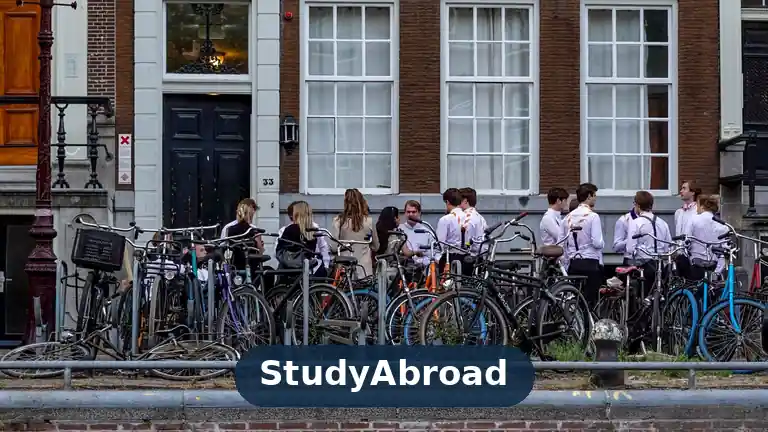
Student life in the Netherlands is built around the bicycle. Almost every student cycles daily, and cities such as Amsterdam, Utrecht and Groningen are designed for it, with separated cycle lanes and secure parking. Housing is the hardest part of the move, because demand exceeds supply in the popular cities, so start the search as soon as you are admitted and beware of scams that ask for money before a viewing. The guide on how to find student housing abroad safely explains the warning signs.
Daily life is international and informal, with most people speaking excellent English, though learning basic Dutch helps with part time jobs, housing and local friendships. The weather is mild but rainy and windy, with short winter days, so a good rain jacket and waterproof bag are essential. Banking is straightforward, health insurance is compulsory, and the pre departure checklist covers banking, SIM cards, insurance and packing. Student associations, sports clubs and international student groups are the fastest way to settle in.
Conclusion
The Netherlands suits students who want English taught degrees in continental Europe at mid range fees, with a practical teaching style and a clear one year orientation period after graduation. Housing is competitive and part time work needs an employer work permit, but the international atmosphere and the central European location are strong advantages. Confirm every fee and deadline on official university and immigration pages, and start your Studielink application at least a year before the September intake.
What is Studielink in the Netherlands?
Studielink is the national online application system for Dutch higher education. You register your personal details and programme choices there, and then complete the rest of the application, including documents and selection steps, on the university portal.
What is the orientation year in the Netherlands?
The orientation year, or zoekjaar, is a one year residence permit for recent graduates to look for work or start a business in the Netherlands. During that year you can work without a separate work permit, and a qualifying job lets you move onto a work residence permit.
Can international students work in the Netherlands?
Yes, students can usually work up to 16 hours a week during term or full time in the summer months, though the employer must hold a work permit for you in most cases. Check the conditions on your residence permit before you take a job.
How much does it cost to study in the Netherlands?
Tuition for non European students commonly ranges from about 8,000 to 20,000 euros a year, and living costs often fall between roughly 900 and 1,700 euros a month depending on the city. Ranges given here reflect November 2026 and change often, so confirm current figures on official pages.