

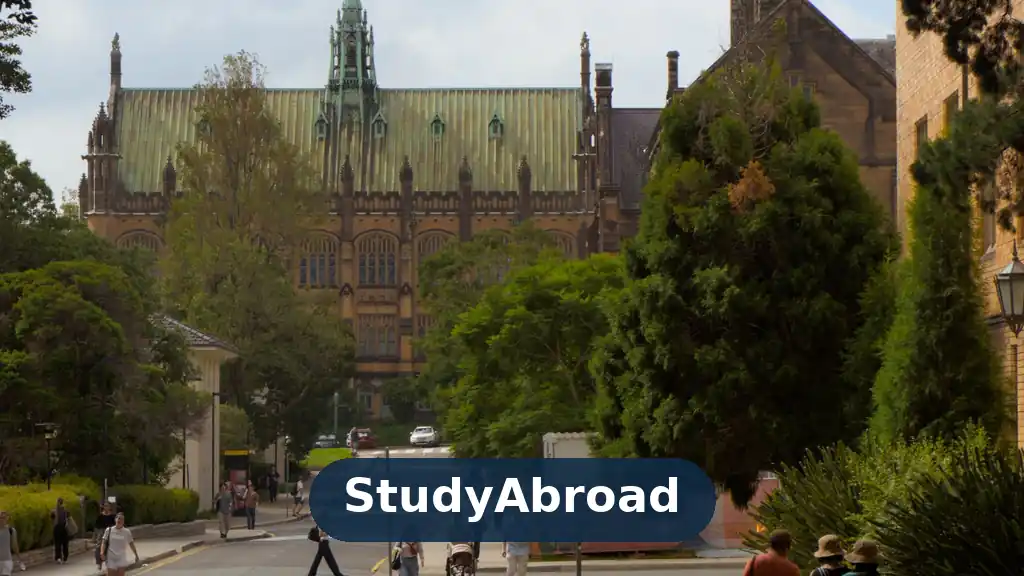
Australia is one of the most popular study destinations for international students, and it is easy to see why. The country has world ranked universities in every major city, a relaxed outdoor lifestyle, and a post study work system that lets graduates stay and gain local experience. The distance from most home countries is long and the costs are significant, but the quality of teaching and the student experience are consistently rated among the best in the world.
This guide explains how the Australian system works, when to apply, what documents you need, what the degree will cost, how the Student visa works and what work is allowed during and after your studies. Ranges given here reflect November 2026 and change often, so check official university and embassy pages before you apply.
How the Australian University System Works
Australian bachelor degrees usually take three years, or four years for honours and professional programmes such as engineering. Masters degrees take one to two years depending on the field and the entry qualification, and doctoral programmes take three to four years of research. Teaching combines lectures, tutorials, laboratory work and practical placements, and assessment uses a mix of exams, essays, group projects and presentations. The academic year is divided into two semesters, with the first starting in February or March and the second in July.
Universities are grouped informally by character, with the Group of Eight research universities in the major cities, technology focused universities, and regional universities that often offer smaller classes and lower living costs. Every course offered to international students must be registered on the Commonwealth Register of Institutions and Courses for Overseas Students, known as CRICOS, and you should only apply to CRICOS registered courses. That registration is a basic quality and consumer protection check, so confirm the CRICOS code on the course page before you apply.
Australian Intakes and Application Deadlines
The main intake in Australia is February or March, at the start of Semester 1, and most programmes offer their widest choice then. A second intake in July, at the start of Semester 2, is available for many programmes, though some courses only start once a year. A smaller November intake exists at a few universities. Application deadlines for February entry commonly fall between September and December, so a realistic plan starts 12 months before the intended start date.
Applications go directly to each university or through an agent, and most students apply to three to five universities. You will need an offer letter and then a Confirmation of Enrolment, known as a CoE, before you can apply for a visa. Our guide to study abroad intakes explains the calendar, and the study abroad timeline and application calendar helps you map each step. Apply early, because popular courses fill quickly and the visa process needs several weeks.
Tests and Documents for Australian Applications
Most Australian universities ask for an English language test such as IELTS or TOEFL, with typical undergraduate requirements around an overall IELTS score of 6.0 to 6.5, and higher scores for teaching, nursing and law. Some universities accept other tests, and students who studied in English may qualify for a waiver, but the visa itself also has an English requirement, so check both sets of rules. Our guide on IELTS, TOEFL, GRE and SAT explains which test fits your situation.
The core documents are academic transcripts, a statement of purpose, letters of recommendation and a CV for postgraduate applicants. Australian universities and visa officers both look for a genuine temporary entrant, which means your course choice should connect clearly to your past study and your future plans. Read how to write a statement of purpose that works and the university application documents checklist, and keep the story consistent across every document you submit.
Tuition and Living Costs in Australia
Tuition for international students in Australia commonly ranges from about 20,000 to 45,000 Australian dollars a year for most undergraduate and masters programmes, with higher fees for medicine, dentistry and veterinary science, where fees can exceed 60,000 dollars a year. Business and engineering programmes usually sit in the middle of the range, while arts and humanities are often at the lower end. Regional universities sometimes charge less than the large city institutions.
Living costs are highest in Sydney and Melbourne, where a student should budget roughly 1,800 to 2,500 Australian dollars a month, while Brisbane, Perth, Adelaide and Hobart are usually cheaper at roughly 1,400 to 2,000 dollars a month. The student visa requires proof of funds for living costs, and the official annual figure is updated regularly, so check the current amount before you apply. Health insurance is compulsory through Overseas Student Health Cover, known as OSHC, and must cover the full length of your stay. Ranges given here reflect November 2026 and change often, so check official university and embassy pages before you apply.
The Australian Student Visa Route
Most international students apply for a Student visa, subclass 500. The route starts with a Confirmation of Enrolment from a CRICOS registered course, and you then apply online with proof of funds, English language evidence, Overseas Student Health Cover and a genuine temporary entrant statement. The statement explains why you chose Australia, why you chose that course and institution, and how the qualification fits your future plans, so write it carefully and honestly.
Visa officers look for a coherent study plan and credible finances, and they can refuse an application if the course choice does not match the academic history or if the funds are unclear. A change of course or institution after arrival is possible but has conditions, so choose well before you apply. Our student visa application guide explains the documents, the guide on how to show financial proof for a student visa covers the evidence, and the guide on student visa processing time explains what affects waiting times. Keep your passport valid and your OSHC active for the whole stay.
Work Rights and the Temporary Graduate Visa
Students on an Australian Student visa can usually work up to 48 hours per fortnight during term and unlimited hours during scheduled course breaks. That limit is set by the visa condition, so track your hours carefully, because breaching the limit can put your visa at risk. Part time work in hospitality, retail, campus roles and tutoring is common, and the earnings help with living costs, though they will not cover tuition.
After graduation, the Temporary Graduate visa, subclass 485, lets graduates stay and work in Australia, with the length depending on the qualification level and the location of study. Bachelor and masters graduates commonly receive two to three years, with longer periods for graduates of regional institutions and for doctoral graduates. Read the guide on post study work visa options after graduation and the guide on work rules for international students by country, and confirm the current length for your qualification before you enrol.
Living in Australia as a Student
Student life in Australia is outdoors and informal. Cities such as Sydney, Melbourne, Brisbane and Perth offer beaches, parks, cafes and a strong cafe culture, and the climate is warm for much of the year, though winters in Melbourne and Hobart can be cool and wet. Most first year students live in university residences or purpose built student apartments, and shared houses are common later. The guide on student accommodation abroad explains the options, and the guide on how to find student housing abroad safely helps you avoid scams.
Public transport is good in the major cities, with student concession fares in most states, and cycling is popular in flatter cities such as Adelaide and Perth. Banking is straightforward, with student accounts at the major banks, and the pre departure checklist covers banking, SIM cards, insurance and packing. Australian campuses have active clubs, sports and support services, and the culture shock guide helps with the first weeks. Sun protection is a real health habit in Australia, not a suggestion, so build it into your daily routine.
Conclusion
Australia suits students who want strong universities, a relaxed lifestyle and a clear post study work route in an English speaking country. The costs are high and the distance is long, but the teaching quality, the campus experience and the graduate visa make it a strong choice. Confirm every fee and deadline on official university and government pages, and start your application at least a year before the February intake.
What is a CoE for studying in Australia?
A Confirmation of Enrolment, or CoE, is an official document issued by your university once you accept an offer and pay the required deposit. It confirms your course, its CRICOS registration and its dates, and you need it to apply for a Student visa subclass 500.
How many hours can international students work in Australia?
Students on a Student visa can usually work up to 48 hours per fortnight during term and unlimited hours during scheduled course breaks. The limit is a visa condition, so track your hours carefully and check the current rule on the official immigration pages.
What is the Temporary Graduate visa subclass 485?
The Temporary Graduate visa lets international graduates stay and work in Australia after their studies, with the length depending on the qualification level and where they studied. Bachelor and masters graduates commonly receive two to three years, with longer periods for regional and doctoral graduates.
Is health insurance compulsory for students in Australia?
Yes, Overseas Student Health Cover, known as OSHC, is compulsory for most international students and must cover the full length of the stay. You must hold valid OSHC before the visa is granted, and the university can usually help you arrange it.