

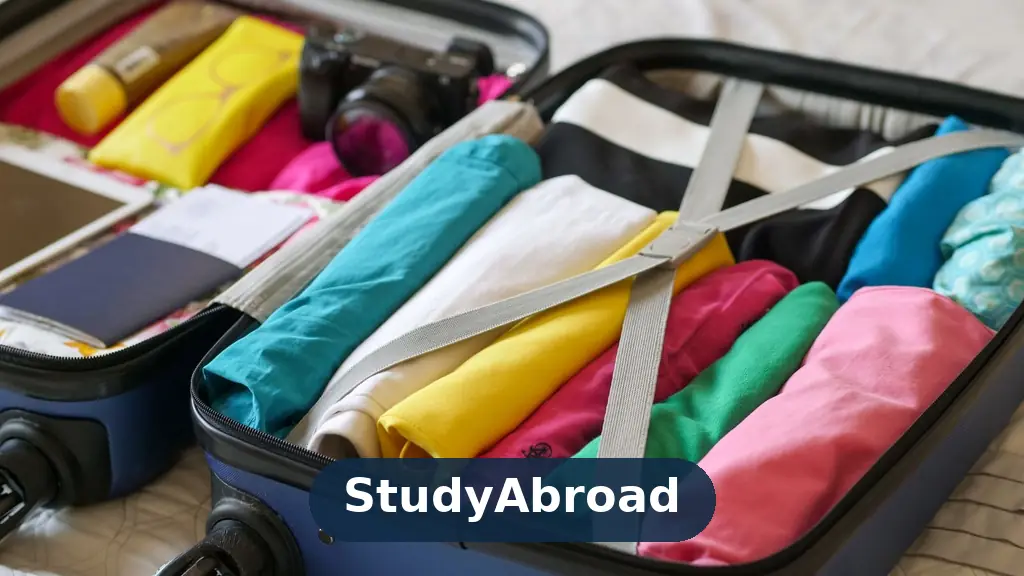
Packing for study abroad is harder than packing for a holiday, because you are moving your life, not just your luggage. You need clothes for a different climate, documents for enrolment, electronics for study, and a few personal items that make a new room feel like home, and all of it has to fit within an airline weight limit. The students who pack well are the ones who pack by list, not by feeling.
This guide is the complete packing list. It covers documents, clothes, electronics, health items, and home basics, explains what to leave behind, and shows how to handle luggage so your first days are calm. Use it with our pre departure checklist to cover the banking, phone, and insurance steps that packing alone does not solve.
Documents and Essentials for Your Hand Luggage
Your hand luggage carries the things you cannot afford to lose. Pack your passport, your visa approval, your admission letter, your accommodation confirmation, and your insurance policy, along with any original academic or medical documents your university asks for at enrolment. Keep photocopies and phone photos of each document in a separate place, and never put originals in a checked bag.
Also pack the essentials for the journey itself, such as your phone and charger, a change of clothes, basic toiletries, any medication you need, and a small amount of local currency. If a checked bag is delayed, these items let you manage the first day without stress. Keep your laptop and its charger in your hand luggage too, because you may need them for enrolment or for contacting your university on arrival.
Keep your valuables and your chargers in the same bag as your documents. A laptop, a phone, a portable charger, and the cables for each one should travel with you, not in a checked bag, because they are expensive to replace and easy to damage. Pack a small bag inside your hand luggage for the items you will need on the plane, such as water, snacks, headphones, and a book, so you are not opening the main bag in a crowded cabin.
Label your hand luggage with your name and a phone number, and keep a photo of the bag and its contents on your phone. If a bag is lost or delayed, a photo and a clear label help the airline find it and help you prove what was inside. Keep your boarding pass and your accommodation address in the same pocket as your passport, so every document you need at arrival is in one place and you are not searching through bags at the airport.
Clothes for the Climate You Are Moving To
Pack for the climate you are moving to, not the climate you are leaving. Check the weather for your arrival month and for the coldest and hottest months of your first semester, and pack layers that you can add or remove. A waterproof jacket, a warm layer, and comfortable walking shoes matter more than a large number of outfits, because you will walk more than you expect in a new city.
Bring enough clothes for about a week, and plan to buy the rest after arrival, because local shops sell clothes suited to the local climate and often at student prices. If you are moving to a cold country, a good winter coat is worth buying before you travel if coats are expensive in your destination, but do not fill your bag with clothes you can buy cheaply on arrival. Roll clothes instead of folding them to save space, and leave room for the things you will bring home.
Study Supplies and Electronics
Your laptop is the most important study item, so check that it works well, back up your files, and bring its charger and any adapters you need. Check the plug type and voltage in your destination country before you travel, and buy a travel adapter and a power strip that accepts your home plugs, because local adapters can be hard to find in the first days.
Bring a phone that is unlocked so it can take a local SIM card, along with a portable charger for long days on campus. Pack a notebook, pens, and a small number of reference books if your course needs them, but do not carry heavy textbooks, because most reading is digital and the university library will have the rest. A pair of headphones is useful for study, calls home, and long flights.
Health Toiletries and Personal Items
Pack any prescription medication you need, along with the prescription and a letter from your doctor, and check the rules for bringing medicine into your destination country before you fly. Bring a basic first aid kit with pain relief, plasters, and any regular medication, plus your glasses or contact lenses and a spare pair if you have one. Keep these items in your hand luggage, not in a checked bag.
For toiletries, pack only enough for the first week, because shampoo, soap, and similar items are easy to buy after arrival and heavy to carry. Bring the personal items that matter to you, such as photos of family, a small keepsake, or a favourite book, because they make a bare room feel like home in the first weeks. Do not pack large amounts of cosmetics or toiletries that you can buy locally.
Kitchen and Home Basics Worth Bringing
Most kitchen and home items are cheaper to buy after arrival, so pack very few of them. A travel mug, a reusable water bottle, and a small set of cutlery are useful for the first days, and a lightweight towel can help if your accommodation does not provide one. Check with your university or landlord whether bedding is provided, because a bed sheet and a pillowcase are small to pack and useful if it is not.
If your accommodation is unfurnished or partly furnished, plan to buy the larger items after arrival from a local shop or a second hand market, rather than carrying them across the world. Many universities run a welcome fair or a second hand sale in the first week where new students can buy kitchen goods cheaply from departing students. Ask your university international office about this before you pack.
What to Leave Behind
Leave behind anything you can buy cheaply after arrival, such as toiletries, kitchen goods, heavy books, and large amounts of food. Leave behind valuables you do not need, such as expensive jewellery, because a student room is not a safe place for them and they add worry to travel. Leave behind clothes for a climate you are not moving to, and any item that you have not used in months, because you will not use it abroad either.
Check the customs rules of your destination country before you pack, because some food, plants, and medicines are restricted or banned, and carrying them can cause a fine or a delay at the border. Check your airline weight limit and the fee for extra luggage, because paying for an overweight bag is a poor use of money. When in doubt, leave it out, because you can buy almost everything you need in your new city within the first week.
Conclusion
Packing for study abroad is a balance between the essentials you cannot replace and the everyday items you can buy after arrival. Documents, medication, electronics, and clothes for the local climate go in the bag, while toiletries, kitchen goods, and heavy books stay behind.
Pack by list, weigh your bags before you leave, and keep the irreplaceable items in your hand luggage. If you have not yet worked through the rest of the move, read our pre departure checklist next, and tick off the banking, phone, and insurance steps before your flight.
What should I pack in my hand luggage for study abroad?
Pack your passport, visa approval, admission letter, accommodation confirmation, insurance policy, and any original academic or medical documents. Add your phone and charger, a change of clothes, basic toiletries, medication, and a small amount of local currency, so a delayed checked bag does not leave you stuck on the first day.
How many clothes should I pack for study abroad?
Bring enough clothes for about a week, packed in layers for the climate you are moving to, and plan to buy the rest after arrival. Local shops sell clothes suited to the local climate, often at student prices. A waterproof jacket, a warm layer, and comfortable walking shoes matter more than a large number of outfits.
What electronics should I bring when studying abroad?
Bring your laptop and charger, an unlocked phone, a portable charger, headphones, and a travel adapter for the plug type in your destination. Check the plug type and voltage before you travel. Do not carry heavy textbooks, because most reading is digital and the university library will have the rest.
What should I leave behind when packing for study abroad?
Leave behind toiletries, kitchen goods, heavy books, and large amounts of food, because they are cheap to buy after arrival and heavy to carry. Leave behind valuables you do not need and clothes for a climate you are not moving to. Check customs rules first, because some food, plants, and medicines are restricted.